20 Free PPE Safety Articles
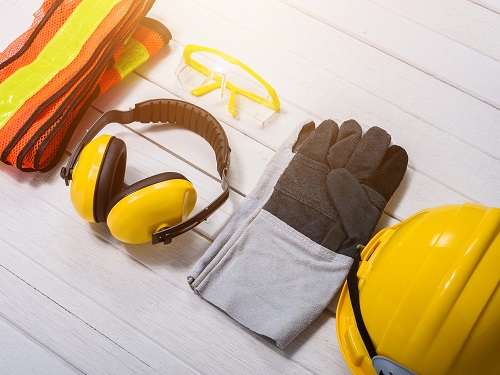
Personal protective equipment (PPE) is the gear a worker wears to reduce exposure to hazards that other controls cannot fully remove, such as safety glasses, gloves, hard hats, hearing protection, respirators, and protective footwear. PPE is the last line of defense in the hierarchy of controls, standing between the worker and an injury when a hazard cannot be engineered out or managed through safe work practices. OSHA requires employers to assess the workplace for hazards, provide the right PPE, and make sure it is used correctly.
The personal protective equipment articles on this page explain how to select and use PPE for the whole body. Lear more about eye and face protection, safety glasses and face shields, hearing protection and preventing hearing loss, hand and arm protection and glove selection, foot protection, hard hats, respiratory protection, high-visibility safety vests, and whole-body protection. Articles also explain why PPE is the last defense used after other controls and how to choose the right equipment for a specific job.
Safety managers and supervisors can use these articles to review a hazard before a job, train a new or returning worker, prepare for a safety meeting, or set up a PPE hazard assessment and program. They are written for safety managers, supervisors, and foremen, and for anyone responsible for selecting PPE, enforcing its use, and keeping a crew protected on the job.
Why it matters
PPE is a worker's last line of defense against workplace hazards.
PPE Safety Articles






.jpg)


PPE FAQs
Is PPE the last line of defense against workplace hazards?
Yes, PPE is the last line of defense in the hierarchy of controls, not the first thing to try. OSHA expects employers to first eliminate or substitute the hazard, then apply engineering controls and safe work practices, and rely on PPE only when those methods cannot fully remove the exposure.
Does OSHA require a PPE hazard assessment?
Yes, OSHA requires a PPE hazard assessment. For general industry, the employer must assess the workplace for hazards that call for PPE, select appropriate protection, and verify the assessment with a written certification (OSHA 1910.132(d)). The assessment identifies which hazards are present so the right PPE is chosen.
Who is required to pay for PPE, the employer or the worker?
The employer must pay for required PPE in most cases, providing it at no cost to the worker (OSHA 1910.132(h)). The rule has narrow exceptions, including ordinary safety-toe footwear and prescription safety eyewear that workers may wear off the job, and everyday clothing or weather gear.
When is eye and face protection required?
OSHA requires eye and face protection whenever workers face hazards such as flying particles, molten metal, liquid chemicals, acids, or injurious light. Eye and face protectors must meet the ANSI Z87.1 standard and include side protection when there is a hazard from flying objects (OSHA 1910.133).
When is a respirator required at work?
A respirator is required when workers are exposed to harmful dusts, fumes, gases, or other airborne contaminants that cannot be controlled by other means. OSHA's respiratory protection standard then applies and requires a written program, a medical evaluation before use, and fit testing for tight-fitting respirators (OSHA 1910.134).
At what noise level does OSHA require hearing protection?
OSHA requires hearing protection at the action level, an 8-hour time-weighted average of 85 decibels. At or above that level, the employer must provide hearing protectors and put a hearing conservation program in place (OSHA 1910.95). The permissible exposure limit is 90 decibels as an 8-hour average.