14 Free Electrical Safety Articles
Electrical safety is the set of work practices, equipment, and training that protects workers from the hazards of electricity, including shock, electrocution, arc flash, burns, and fires. Electricity is a serious and often invisible hazard, and contact with it remains one of the leading causes of fatal workplace injuries, with electrocution ranking among OSHA's Focus Four construction hazards.
The articles on this page explain the most common electrical hazards and how to control them, grounded in current OSHA requirements. They cover extension cord safety, ground fault circuit interrupters (GFCIs), working near overhead power lines, and electrical hazards on construction sites, along with the safe use of portable generators, cable trays, and the charging, storage, and handling of batteries, including vehicle batteries.
Use these safety articles to review electrical hazards before a job starts, train a new or returning worker, or lead an electrical safety meeting. They are written for foremen, safety managers, electricians, and anyone responsible for a crew that works on or near energized equipment, overhead power lines, or temporary power on a construction or industrial job site.
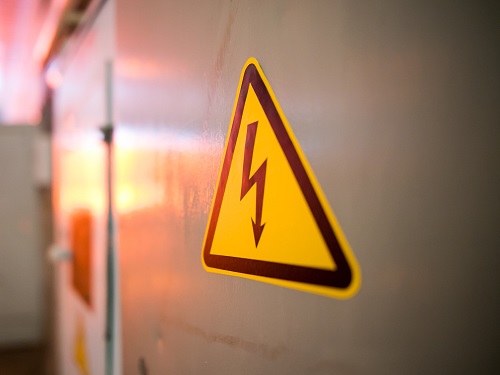
Why it matters
Electrocution is one of OSHA’s Focus Four hazards in construction.
Electrical Safety Articles


Electrical FAQs
When are GFCIs required on a construction site?
OSHA requires ground-fault circuit interrupter (GFCI) protection for 120-volt, single-phase, 15- and 20-ampere receptacles on construction sites that are not part of the permanent wiring (OSHA 1926.404(b)). As an alternative, the employer may implement an assured equipment grounding conductor program.
How far must workers stay from overhead power lines?
Stay at least 10 feet away from overhead power lines rated 50 kV or less, with greater distances required for higher voltages. Assume every overhead line is energized, and apply this clearance to both workers and equipment such as cranes, ladders, and scaffolds.
What is the difference between electric shock and electrocution?
Electric shock is the injury that results when current passes through the body, while electrocution refers specifically to a death caused by electric shock. Every electrocution begins as a shock, but the severity depends on the amount of current, the path it takes through the body, and how long the contact lasts.
Do extension cords need GFCI protection?
Yes, but an ordinary extension cord does not provide ground-fault protection on its own. The GFCI protection must come from the receptacle, or workers should use a GFCI-equipped cord or plug-in adapter. Every cord should also be rated for the load, undamaged, and equipped with its grounding pin.
Can workers work on live, energized electrical equipment?
In most cases, no. Electrical equipment should be deenergized and locked and tagged out before work whenever possible (OSHA 1910.333). Live work is permitted only when deenergizing introduces greater hazards or is infeasible, and then only by qualified persons using appropriate protective equipment and safe work practices.
Who is considered a qualified person for electrical work?
A qualified person is someone trained to recognize and avoid the electrical hazards of the specific equipment and task, including the ability to identify energized parts, determine voltage, and maintain safe approach distances. OSHA allows only qualified persons to work on or near exposed energized parts, and anyone else is treated as unqualified and must keep a safe distance.