7 Free OSHA Focus Four Safety Articles
OSHA's Focus Four are the four hazard categories that cause the most construction worker deaths, including falls, struck-by, caught-in/between, and electrocution. Also known as the Fatal Four, these hazards together are responsible for more than half of all construction fatalities each year. Because nearly every one of those deaths is preventable, OSHA puts the Focus Four at the center of its construction outreach training.
The Focus Four articles on this page work through each of the four hazards. Fall hazards are reviewed in articles about slip, trip, and fall risks found on most job sites, There are articles that cover struck-by hazards from vehicles, equipment, and falling or flying objects, and caught-in and caught-between hazards such as trench cave-ins and unguarded machinery. Electrical safety articles focus on eliminating electrocution hazards on the job site.
Foremen and safety managers can use these articles to prepare a toolbox talk, brief a new crew member, or refresh the big four hazards before starting high-risk work. They are written for foremen, safety managers, and construction workers who want a clear, practical understanding of what causes the most deaths on the job and how to prevent each one.

Why it matters
OSHA’s Focus Four hazards cause most construction fatalities.
OSHA Focus Four Safety Articles


OSHA Focus Four FAQs
What are OSHA's Focus Four hazards?
OSHA's Focus Four are the four leading causes of death in construction: falls, struck-by, caught-in/between, and electrocution. OSHA also refers to them as the Fatal Four. Together they cause more than half of construction worker deaths each year, which is why they are a required part of OSHA 10 and 30-hour construction outreach training.
Why does OSHA emphasize the Focus Four?
OSHA emphasizes the Focus Four because they cause the majority of construction fatalities, and nearly all of those deaths are preventable. OSHA has found that eliminating the Focus Four would save hundreds of workers' lives each year, so concentrating training, inspections, and job planning on falls, struck-by, caught-in, and electrocution is the most effective way to reduce construction deaths.
What counts as a fall hazard in the Focus Four?
A fall hazard is any condition where a worker could fall to a lower level and be injured, such as unprotected roof and floor edges, floor holes, leading edges, scaffolds, and ladders. Falls are the single largest cause of construction deaths. OSHA requires fall protection starting at 6 feet in construction (OSHA 1926.501).
What is a struck-by hazard?
A struck-by hazard is the danger of being hit by a moving, flying, falling, or rolling object. Common examples include being struck by a vehicle or heavy equipment, a swinging crane load, a falling tool, or flying debris from a saw or nail gun. Struck-by incidents are among the most frequent causes of construction injuries and deaths.
What are caught-in or caught-between hazards?
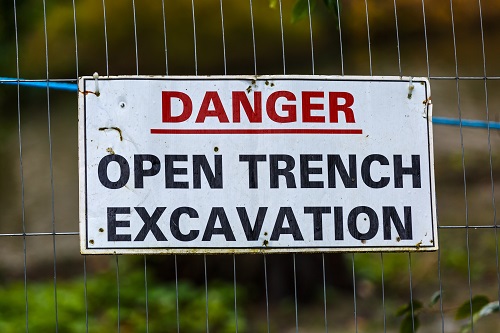
Caught-in/between hazards injure a worker who is squeezed, caught, crushed, pinned, or compressed between two or more objects, or between parts of an object. Common examples are trench and excavation cave-ins, being pulled into unguarded machinery, and being pinned between equipment and a wall or vehicle. Unlike a struck-by injury, the harm comes from crushing or compression rather than impact.
How do electrocution hazards happen in construction?
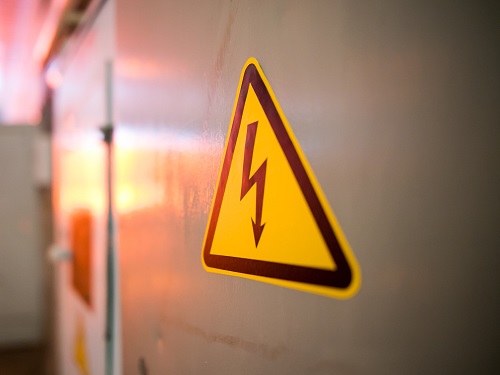
Electrocution hazards come from contact with energized parts, overhead or buried power lines, damaged tools and extension cords, and equipment that becomes energized unexpectedly. On construction sites, a common cause is contacting overhead power lines with ladders, scaffolds, cranes, or other equipment. Electrocution is one of the Focus Four and is almost always preventable with planning, training, and proper equipment.