Floor holes and openings are serious workplace hazards that can result in falls, severe injuries, and fatalities. These hazards are not limited to unfinished floors or obvious openings in construction sites. They can also be found on rooftops, around stairways, and in other walking and working areas where employees may be exposed to an unexpected fall.
OSHA Standard 1926.500(b) defines a hole as a gap or void 2 inches (5.1 cm) or more in its least dimension, in a floor, roof, or other walking or working surface.
Skylights are particularly dangerous because workers may mistake them for solid roof surfaces or assume they are strong enough to support their weight. Without proper protection, a single misstep or loss of balance near an opening can result in a deadly fall.
OSHA Standard 1926.500(b) defines a hole as a gap or a void 2 inches or more in its least dimension, in a floor, roof, or other walking/working surface.
Skylights and Other Floor Holes
Floor and roof openings can occur throughout construction sites, including areas where workers may not expect to encounter fall hazards.
Examples of floor holes include:
- Roof drains and roof openings
- Concrete penetrations for piping, conduit, or ductwork
- Unfinished stairways and stairwell openings
- Drilled pier and shaft openings
- Excavations and other ground openings
- Skylights and other openings in roof surfaces
Some openings are easy to recognize, while others may be hidden by materials, debris, or surrounding construction activities. Workers should never assume that a skylight or other covered opening is safe to walk on unless it has been verified to provide adequate protection.
Before beginning work, inspect the area for potential floor and roof openings and ensure that appropriate fall protection is in place.
Deadly Skylight Incidents
Falls through unguarded skylights have resulted in preventable workplace fatalities, including incidents involving workers who were experienced in construction and roofing operations.
Laborer Dies After Falling Through a Skylight
In a NIOSH investigation, a 14-year-old construction laborer in Alabama died after falling approximately 12 feet through an unguarded skylight while removing roofing materials. The worker reportedly lost his balance and fell backward through the opening onto a concrete surface below.
Emergency responders arrived within minutes, but the worker's injuries were fatal. The incident demonstrates how quickly an unprotected skylight can become a life-threatening hazard.
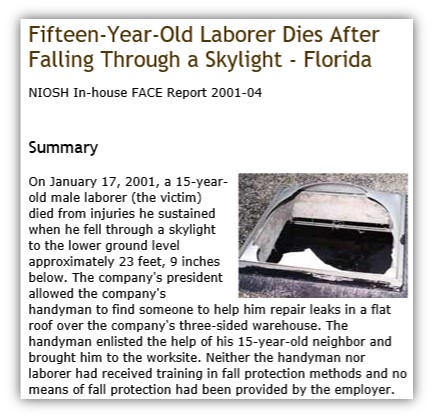
Following the investigation, NIOSH recommended that employers take several steps to prevent similar incidents:
- Conduct a site inspection prior to beginning roofing work to identify all potential fall hazards present, and take appropriate steps to ensure that identified hazards are eliminated or controlled prior to the commencement of work activities.
- Develop and enforce a comprehensive safety program that includes employee training on recognizing fall hazards and avoiding unsafe conditions.
- Consider permanent guardrails or protective covers around skylights to protect workers who may need to access rooftops for maintenance or other activities.
OSHA Standard 1926.501(b)(4) Each employee on walking/working surfaces shall be protected from falling through holes (including skylights) more than 6 feet above lower levels, by personal fall arrest systems, covers, or guardrail systems erected around such holes.
Caution tape, warning signs, or verbal reminders alone are not substitutes for required fall protection. Properly installed covers and guardrails provide physical protection against falls, while personal fall arrest systems may be used where permitted and appropriate for the work.
Experienced Roofing Supervisor Falls Through a Skylight
CAPublicHealth has put together a sobering video that explains events that led to a roofing supervisor's death after he fell 30 feet through a warehouse roof skylight.
The worker, Joe, had been employed by the same roofing company for 25 years. Despite his extensive experience, he fell through an unprotected skylight while working on the roof. The video includes photographs from the investigation and reenactments involving workers who were present that day.
This short video provides a powerful reminder that experience alone does not eliminate fall hazards.
Roofing and construction companies should consider including the video in their fall protection training, or at least show this video during a short toolbox talk if possible. Even veteran employees need to participate in weekly safety meetings.
Preventing Falls Through Floor Holes and Skylights
Every construction worker should understand how to recognize floor and roof openings and what protective measures are necessary before beginning work.
Important safety precautions include:
- Inspect the work area. Identify floor holes, skylights, unfinished stairways, and other openings before beginning work.
- Install proper fall protection. Use covers, guardrails, or personal fall arrest systems as required for the hazard.
- Secure floor hole covers. Covers must be capable of supporting the required loads and secured against accidental displacement.
- Mark covers clearly. Where required, covers must be color-coded or marked with the word "HOLE" or "COVER" to provide a warning of the hazard.
- Never rely on caution tape alone. Warning tape does not provide physical protection against a worker falling through an opening.
- Keep work areas organized. Remove unnecessary materials and debris that could conceal openings or create trip hazards near unprotected areas.
- Report unsafe conditions. If an opening is uncovered or fall protection is missing or damaged, stop affected work and notify a supervisor.
- Review fall hazards regularly. Ensure workers understand the hazards associated with their tasks, particularly when work locations or site conditions change.
OSHA Standard 1926.502(i) establishes specific requirements for hole covers, including their strength, secure installation, and identification.
Lessons Learned
Both fatal incidents demonstrate that skylights can be deadly when adequate fall protection is not in place. Workers may recognize the presence of a skylight without fully understanding the danger of falling through it, particularly when the surface appears solid.
Employers must ensure that fall hazards are identified and appropriate protective measures are established before employees begin work. Supervisors should reinforce these requirements during safety meetings, and workers should never enter areas with unprotected openings.
Floor holes and skylights present serious fall hazards that require more than a warning sign or caution tape. Workers should inspect their surroundings, recognize potentially dangerous openings, and ensure required fall protection is in place before beginning work. Proper covers, guardrails, and fall arrest systems can help prevent serious injuries and fatalities. Never assume that an opening is safe simply because it is visible or has been present for a long time. Identifying and controlling fall hazards before work begins can save lives.


