Fire prevention starts with recognizing common hazards, controlling ignition sources, properly handling flammable materials, and making sure workers know what to do if a fire occurs. Regular safety meetings are a good opportunity to reinforce these precautions and keep fire prevention part of everyday work practices.

According to the U.S. Bureau of Labor Statistics, in recent years, more than 200 workers die annually as a result of fires and explosions.
The National Fire Protection Association (NFPA.org) reports that during 2009-2013 an estimated 37,000 fires were reported to U.S. fire departments per year and these included: 26,300 outside or unclassified fires, 7,220 structure fires, and 3,440 vehicle fires. In addition, these fires caused $1 billion in property damage, 18+ deaths and 270+ injuries per year.
OSHA Construction Standard 1926.152(g)(8) says that there shall be no smoking or open flames in the areas used for fueling, servicing fuel systems for internal combustion engines, receiving or dispensing of flammable liquids. And OSHA Construction Standard 1926.152(g)(9) states conspicuous and legible signs prohibiting smoking shall be posted.
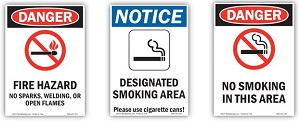
OSHA General Industry Standard 1910.106(b)(6) "Sources of ignition." In locations where flammable vapors may be present, precautions shall be taken to prevent ignition by eliminating or controlling sources of ignition. Sources of ignition may include open flames, lightning, smoking, cutting and welding, hot surfaces, frictional heat, sparks (static, electrical, and mechanical), spontaneous ignition, chemical and physical-chemical reactions, and radiant heat.
Fire Prevention Safety Meetings
Incorporate the topic of fire prevention into your safety meeting schedule. Ensure that the following important issues are part of your fire prevention meeting.
- Fire prevention is every workers' responsibility!
- Be alert to your activities and avoid creating fire hazards.
- Only smoke in designated areas.
OSHA Construction Standard 1926.150(a)(1) The employer shall be responsible for the development of a fire protection program to be followed throughout all phases of the construction and demolition work, and he shall provide for the firefighting equipment as specified in this subpart. As fire hazards occur, there shall be no delay in providing the necessary equipment.
More points to cover during any fire prevention safety meeting:
- Ensure that all employees know where the fire extinguishers are located at the work site.
- Employees should report any missing, damaged, or spent fire extinguishers immediately.
- All team members should be familiar with the parts of a fire extinguisher and how to tell if it has been discharged.
- No one should attempt to use a fire extinguisher unless they have been trained to do so! Setting up fire extinguisher training is a great idea for every employer.
- Always use the correct containers for using, storing, or transporting fuel.
- Report any fires or possible fires immediately!
Fire prevention is everyone’s responsibility. Workers should remain alert for ignition sources and other fire hazards, follow safe procedures for handling flammable materials, and immediately report fires, damaged fire extinguishers, and unsafe conditions. Regular training and attention to fire hazards can help prevent a small problem from becoming a serious emergency.
.jpeg)

.jpeg)