Confined spaces present hazards that workers may not encounter in ordinary work areas, and falls are one of them. A worker can fall through an unprotected opening, while climbing into or out of a space, or from an elevated surface inside the space. Limited access, nearby equipment, and restricted movement can also make the consequences of a fall more severe and complicate rescue.
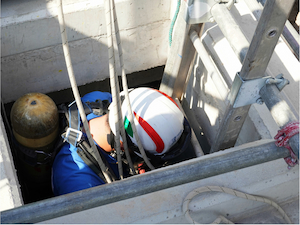
Effective confined space fall protection begins before entry. Workers need to recognize where falls could occur, understand how they will safely enter and exit, and use the appropriate access, fall protection, and retrieval equipment for the space.
Where Do Confined Space Fall Hazards Occur?
Confined spaces include tanks, vaults, manholes, pits, silos, shafts, and other spaces with limited or restricted means of entry or exit. Depending on the space, fall hazards may exist both outside and inside the confined space.
Falls may occur when workers:
- Step into an uncovered or unguarded opening
- Climb through a hatch or descend a ladder
- Transition from the walking surface onto or off a ladder
- Work from an internal platform, ledge, or elevated surface
- Lose their footing on wet, sloped, corroded, uneven, or obstructed surfaces
- Climb on equipment or piping to reach a work area
- Attempt to enter or exit while carrying tools or materials
A relatively short fall may still cause significant injury when a worker can strike piping, equipment, structural components, or other objects inside the space. The configuration and restricted opening of a confined space may also make it more difficult to reach and remove an injured worker.
Evaluate Fall Hazards Before Confined Space Entry
Fall protection planning should begin before anyone enters the confined space. The entry area and the route workers will use should be evaluated for conditions that could cause a fall.
Look for openings, elevation changes, unstable surfaces, damaged access equipment, poor footing, and other physical hazards. Workers should know how they will enter, move through, work inside, and exit the space before entry begins.
The area surrounding the opening matters as well. Hoses, cords, tools, debris, and materials can create trip hazards at the exact location where workers may already be concentrating on climbing into or out of a restricted opening.
Pedestrian and vehicle traffic may create additional hazards. OSHA’s permit-required confined space requirements call for barriers when necessary to protect entrants from external hazards.
Protect Confined Space Openings
An open manhole, hatch, pit, or floor opening can expose workers to a fall before anyone enters the confined space.
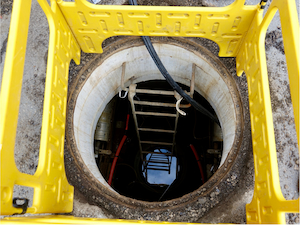
When an entrance cover is removed, appropriate protection is needed to prevent workers from accidentally falling through the opening. OSHA’s confined space requirements address guarding entrance openings with a railing, temporary cover, or other temporary barrier that prevents an accidental fall through the opening and protects workers inside the space from foreign objects.
Depending on the work and applicable fall protection requirements, protection around an opening may involve a secured cover, guardrail system, travel restraint system, personal fall protection system, or another appropriate method.
Covers and barriers should not be removed prematurely. The entry area should be prepared and authorized workers should be ready before work begins.
Use Safe Access Methods
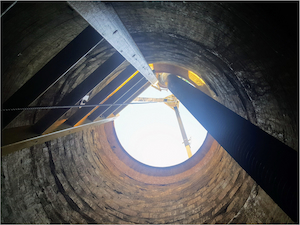
Entering and exiting a vertical confined space can be one of the most difficult parts of the job. A worker may have to climb through a narrow opening while transitioning onto or off a ladder, steps, or another access system.
Ladders, steps, platforms, hoists, tripods, davit systems, and other equipment used for access should be suitable for the opening, environment, and workers using them. Access equipment should also be inspected before entry.
Take extra care when entering or exiting vertical confined spaces. Climbing through an opening or transitioning onto or off a ladder is when many falls can occur.
Safe Climbing Practices
Workers should face the ladder and maintain a secure grip while climbing. Ladder rungs and footwear should be kept free of mud, oil, water, and other slippery substances.
Tools and materials can make entry more difficult. Instead of climbing with objects in a hand or tucked under an arm, use an appropriate tool bag, hand line, or approved lifting method.
Workers should also:
- Move carefully through narrow hatches and restricted openings
- Avoid damaged, loose, heavily corroded, or improperly positioned access equipment
- Never use piping, valves, cables, or structural components as steps or handholds unless they were designed for that purpose
- Consider how harnesses, respirators, protective clothing, tools, and communication equipment may affect movement through the opening
These precautions are especially important where the opening itself restricts normal body movement.
Recognize Fall Hazards Inside the Space
Getting through the entrance safely does not eliminate the fall hazard. Conditions inside a confined space can create additional opportunities to slip, trip, or lose balance.
Low lighting and poor visibility can make elevation changes and obstacles difficult to see. Sloped floors, internal ladders, uneven surfaces, accumulated liquids, and debris can affect footing. Workers may also be forced into awkward positions because of limited room.
Remain on designated walking and working surfaces and use only approved access equipment inside the confined space. Do not climb on piping, braces, machinery, or makeshift platforms to reach the work.
When elevation is necessary, use properly selected ladders, scaffolds, or elevated work platforms that are appropriate for the conditions and task.
Personal Fall Protection in Confined Spaces
Some confined space work requires personal fall protection. Where personal fall protection is required, workers should use only the system selected for the task.
Before use, inspect harnesses, connectors, lifelines, self-retracting devices, and anchorage equipment. Damaged or questionable equipment should be removed from service.
Selecting and using a fall protection system involves more than putting on a harness. Important factors can include:
- Anchorage and connection points
- Available fall clearance
- Sharp edges that could affect a lifeline or lanyard
- The possibility of a swing fall
- Nearby structures or equipment that could be struck during a fall
Available clearance can be particularly important in confined spaces. A worker can still strike the floor or nearby equipment if the system does not provide enough clearance to arrest the fall.
Retrieval Systems vs. Fall Protection
Confined space retrieval equipment and personal fall protection serve related but different purposes. Although both systems may connect to the same full-body harness, each is designed to perform a separate function.
A retrieval system is designed to help remove a worker from a confined space during an emergency without sending another worker inside.
A typical vertical retrieval arrangement may include a full-body harness attached to a retrieval line connected to a tripod, davit system, or other mechanical retrieval device positioned above the opening.
Workers should not assume that a retrieval system also provides fall arrest. A retrieval system should provide fall arrest only when the complete system is specifically designed and rated for that purpose.
OSHA Retrieval Requirements
For permit-required confined spaces, entrants generally use a chest or full-body harness connected to a retrieval line unless the equipment would increase the overall risk of entry or would not contribute to the entrant’s rescue.
The retrieval line must be arranged so rescue can begin promptly when necessary. OSHA’s general industry and construction confined space standards require a mechanical device to be available to retrieve personnel from vertical permit spaces more than 5 feet deep.
Retrieval equipment should not be treated as a substitute for required personal fall protection unless the complete system is designed and rated to perform both functions.
Confined Space Rescue Requires Planning
A fall inside a confined space can quickly become a rescue emergency. The restricted opening and internal configuration that make the space difficult to enter can also make it difficult to remove an injured or unresponsive worker.
Before entry, workers should understand the entry, fall protection, and rescue plan. Entrants and attendants need a reliable method of communication, and workers should understand which equipment is intended for fall protection and which equipment is intended for retrieval.
Non-entry retrieval is important because it may allow an entrant to be removed without exposing another worker to the hazards inside the space.
Workers should never enter a confined space to rescue a fallen or unresponsive coworker unless they are trained, equipped, and assigned to perform entry rescue.
Frequently Asked Questions About Confined Space Fall Protection
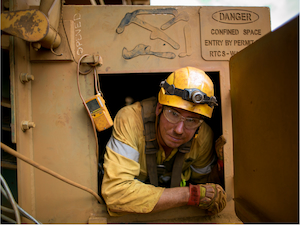
Confined space fall protection can raise questions because the hazards and required protective measures vary depending on the space, entry method, and work being performed. The following answers address some common questions about preventing falls and using fall protection and retrieval equipment during confined space work.
Is Fall Protection Always Required in a Confined Space?
Not every confined space presents the same fall hazards, and entering a confined space does not automatically mean that a personal fall arrest system is required. The hazards must be evaluated and the appropriate protections selected based on the space, entry method, work being performed, and applicable requirements.
What Are Common Fall Hazards Around a Confined Space Opening?
Common hazards include uncovered openings, elevation changes, slippery surfaces, trip hazards, unsafe ladders or access equipment, and nearby pedestrian or vehicle traffic. Workers can also be exposed while transitioning from the surrounding walking surface onto a ladder or other access system.
Can a Confined Space Retrieval System Be Used for Fall Protection?
Not automatically. Retrieval systems are primarily intended to facilitate non-entry rescue. A retrieval system should only be relied upon for fall protection when the complete system is specifically designed, rated, and configured to perform that function.
Why Are Tripods and Davit Systems Used for Confined Space Entry?
Tripods and davit systems can provide an overhead support point for retrieval equipment at vertical confined space openings. Depending on the equipment and its approved configuration, they may support retrieval lines, winches, or other equipment used for worker entry, retrieval, or fall protection.
When Does OSHA Require a Mechanical Retrieval Device?
For vertical permit-required confined spaces more than 5 feet deep, OSHA’s general industry standard requires a mechanical device to be available for personnel retrieval. OSHA’s construction confined space standard contains a corresponding requirement for vertical permit spaces more than 5 feet deep.
Preventing Falls During Confined Space Work
Confined space fall protection involves more than protecting the opening. Workers may encounter fall hazards while approaching the space, entering or exiting, moving inside, and performing the assigned work.
Before entry, identify where falls could occur and make sure openings are protected, access equipment is appropriate, and the work area is clear. Inside the space, stay on designated walking and working surfaces and use the equipment selected for the task. When personal fall protection or retrieval equipment is required, inspect it before use and understand what each system is designed to do.
Most importantly, confined space entry, fall protection, and rescue should be planned together. A worker who understands the hazards before entering the space is better prepared to avoid a fall and respond correctly if conditions change.

.jpg)
