Safe & Sound Week is an annual nationwide campaign that encourages employers and workers to strengthen workplace safety and health programs. Held each August, the event highlights the importance of identifying hazards, preventing injuries, and involving employees in creating safer work environments. Organizations of all sizes and industries can participate by promoting safety awareness, recognizing employee contributions, and taking practical steps to improve their existing safety programs.
What is Safe & Sound Week?
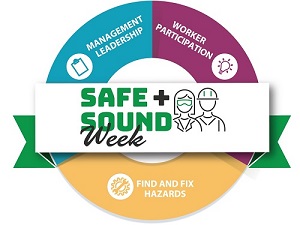
Safe & Sound Week is a nationwide event to raise awareness and understanding of the value of safety and health programs in the workplace. Organizations such as OSHA, NIOSH, The National Safety Council, ASSP, AIHA (and so many more!) have come together to organize and promote this week-long event that will be held in August.
Safe workplaces are sound businesses. Successful safety and health programs can proactively identify and manage workplace hazards before they cause injury or illness, improving sustainability and the bottom line. Participating in Safe & Sound Week can help get your program started or energize an existing one.

Who Can Participate?
Organizations of any size or in any industry are encouraged to participate in Safe & Sound Week. This is a great opportunity for companies to show their commitment to safety to workers, customers, the public and business partners.
What To Do During Safe & Sound Week
Participating in Safe & Sound Week is easy! Here are several suggestions to get you thinking about what would be most appropriate for your organization.
- Deliver a safety and health message from the management leadership to the staff
- Management leadership can establish a visible presence to promote safety & health
- Empower workers with safety & health information
- Have employees provide feedback on what safety meeting topics or toolbox talks should be added to your safety program
- Recognize workers or teams for contributions to workplace safety
- Evaluate safety & health processes and systems to find and fix hazards
- Create challenges, contests, and competitions to find and fix workplace hazards
- Share photos of your teams participating in Safe & Sound Week by using the hashtag #SafeAndSoundAtWork on Social Media
Choose activities that are relevant to your workplace and encourage employees to participate. Safe & Sound Week is also an opportunity to identify improvements that can become part of your organization's ongoing safety efforts long after the event ends.

Planning Safe & Sound Week Events
Planning and promoting your event can help make it a success. OSHA provides a lot of tools and resources that you can use so you don’t have to spend valuable time creating something from nothing.
Awareness campaigns, such as this one, offer a great opportunity to safety management, business owners and team leaders to highlight the importance and commitment the organization has to worker safety. It doesn’t take a lot of time, money or resources to participate. At minimum, consider an email from management to the staff, a brief safety meeting or a sign on the central bulletin board.

Benefits of a Workplace Safety Program
Serious workplace injuries and illnesses can have lasting consequences for employees, their families, and the organizations they work for. Beyond the human impact, incidents can lead to lost productivity, increased costs, equipment damage, and disruptions to business operations. An effective safety and health program helps employers identify and control hazards before injuries occur while supporting a safer, more productive work environment.
Safety and health programs can help businesses:
- Prevent workplace injuries and illnesses
- Improve compliance with laws and regulations
- Reduce costs associated with workplace incidents and workers' compensation claims
- Encourage employee participation and engagement
- Support corporate social responsibility goals
- Improve productivity and overall business operations
These benefits are not limited to large organizations with dedicated safety departments. Small and medium-sized businesses can also develop effective safety programs by establishing clear procedures, providing appropriate training, encouraging hazard reporting, and involving employees in safety decisions.
Safe & Sound Week provides an opportunity to evaluate existing safety practices and identify areas for improvement. For organizations without a formal safety meeting program, it can also be an ideal time to introduce regular toolbox talks or safety discussions that keep important safety information in front of employees throughout the year.

Participating in Safe & Sound Week is a simple way to demonstrate an organization's commitment to protecting employees and improving workplace safety. Whether through a safety meeting, employee recognition, hazard assessment, or management-led discussion, every activity can contribute to greater safety awareness and stronger employee involvement. The most important goal is to carry that commitment beyond a single week by making hazard prevention, communication, and continuous improvement part of everyday operations.
If your organization does not yet have a safety meeting program in place, Safe & Sound Week would be a great time to let your employees understand the organization’s commitment to safety by starting a regular safety meeting or toolbox talk schedule.

