Falls are one of the most serious hazards in the workplace because they can happen quickly and lead to severe injuries or fatalities. A strong fall protection program helps workers recognize fall hazards, use the right equipment, and follow safe work practices before anyone is placed at risk.
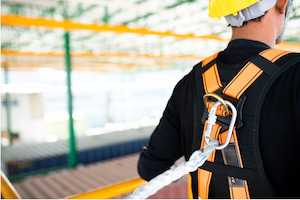
What Is Fall Protection?
Fall protection refers to the systems, equipment, procedures, and work practices used to protect workers from falling from one level to another. This may include guardrails, safety nets, personal fall arrest systems, floor hole covers, warning lines, controlled access zones, ladder safety practices, and proper planning before elevated work begins.
Fall protection is not limited to construction sites. It may be needed anywhere workers are exposed to elevated surfaces, floor openings, roof edges, loading docks, mezzanines, scaffolds, ladders, aerial lifts, or other areas where a fall could occur.
OSHA requires fall protection at different heights depending on the type of work. In general industry, fall protection is typically required at elevations of 4 feet. In construction, fall protection is generally required at 6 feet. Different rules may apply for shipyards, longshoring, scaffolds, steel erection, ladders, and other specific work situations.
Why Fall Protection Matters
Falls are often preventable, but they remain a major cause of workplace and jobsite injuries. A worker does not need to fall from a great height to be seriously hurt. Falls from ladders, platforms, trucks, equipment, low roofs, or floor openings can cause broken bones, head injuries, spinal injuries, and other life-changing harm.
Fall protection matters because it addresses the hazard before the fall happens. The goal is not just to have equipment available. The goal is to plan the work, control the hazard, train workers, inspect equipment, and make sure each person understands how to work safely at height.
A good fall protection plan should answer several important questions before the work begins:
- Where could a worker fall?
- How far could the worker fall?
- What surface or hazard could the worker strike?
- What protection is required for the task?
- Has the equipment been inspected?
- Is there a rescue plan if a fall occurs?
When these questions are answered before the job starts, workers are much less likely to rely on guesswork, shortcuts, or unsafe judgment while working near a fall hazard.
Common Fall Hazards on the Job
Fall hazards can exist in many different work areas. Some are obvious, such as an open roof edge. Others are easier to overlook, such as an uncovered floor hole, an unstable ladder, or a loading dock with no edge protection.
Common fall hazards at work include:
- Unprotected roof edges
- Floor holes and wall openings
- Skylights that are not protected or rated to support a person
- Ladders that are damaged, unstable, or used incorrectly
- Scaffolds without proper guardrails or access
- Aerial lifts used without required fall protection
- Mezzanines, platforms, and elevated storage areas
- Loading docks and truck beds
- Ramps, runways, and walkways
- Open excavations, pits, or shafts
- Slippery, cluttered, or uneven walking surfaces
Fall hazards should be identified during pre-task planning, routine inspections, and job hazard assessments. Conditions can change throughout the day, especially when materials are moved, covers are removed, weather changes, or work progresses to a new area.
Types of Fall Protection Systems
Different fall protection systems are used for different hazards. The right system depends on the work activity, the height, the surface, the available anchor points, and the surrounding hazards.
Guardrail Systems
Guardrails are one of the most common forms of fall protection because they create a physical barrier between the worker and the fall hazard. A properly installed guardrail system can help prevent workers from reaching an unprotected edge in the first place.
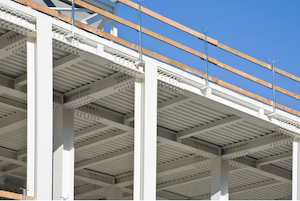
Guardrails are often used around roof edges, floor openings, platforms, ramps, runways, mezzanines, and other elevated areas. They must be installed correctly, maintained in good condition, and strong enough to provide real protection. A weak, damaged, incomplete, or temporary-looking rail may create a false sense of security.
Personal Fall Arrest Systems
A personal fall arrest system is designed to stop a worker after a fall has started. It typically includes a full-body harness, a connector such as a lanyard or self-retracting lifeline, and a suitable anchorage point.
Personal fall arrest systems must be selected, used, and inspected carefully. The harness must fit correctly, the connection point must be appropriate, and the anchorage must be strong enough for the system being used. Workers also need to understand fall clearance, swing fall hazards, equipment limitations, and the importance of connecting before they are exposed to the fall hazard.
A personal fall arrest system is not effective if it is not tied off, tied off to the wrong point, adjusted incorrectly, or used with damaged components.
Fall Restraint Systems
A fall restraint system is designed to prevent a worker from reaching the edge where a fall could occur. Unlike a personal fall arrest system, it does not wait until the worker falls. It keeps the worker away from the hazard.
Fall restraint can be a strong option when the work area allows it because preventing a fall is usually better than arresting a fall after it happens. However, the system still requires proper anchorage, correct setup, and worker training.
Safety Net Systems
Safety net systems are designed to catch workers if they fall. They are more common in certain construction activities where other forms of fall protection may be difficult to use. Safety nets must be installed, positioned, and maintained according to applicable requirements so they can perform as intended.
Covers for Holes and Openings
Floor holes, roof openings, and similar hazards should be protected with guardrails, covers, or another effective method. Covers must be strong enough to support the loads they may receive, secured so they do not shift, and clearly marked when needed.
An unsecured piece of plywood placed over a hole can be extremely dangerous. If the cover is not secured or clearly identified, workers may move it, trip over it, drive equipment across it, or step onto a surface that cannot support them.
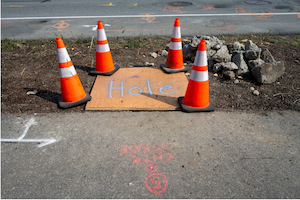
Warning Lines and Controlled Access Zones
Warning lines and controlled access zones may be used in certain work situations, especially in roofing or specialized construction activities. These systems require clear procedures and worker understanding. They should not be treated as a substitute for stronger protection unless they are allowed for the specific task and used correctly.
Fall Protection in Construction
Construction work often involves changing conditions, temporary work surfaces, unfinished edges, ladders, scaffolds, lifts, openings, and multiple trades working in the same area. Because of these hazards, fall protection is a major part of construction safety.
Under OSHA construction requirements, workers generally need fall protection when they are 6 feet or more above a lower level, although specific rules vary by activity. OSHA’s construction fall protection standard addresses work areas such as unprotected sides and edges, leading edges, hoist areas, holes, ramps, runways, excavations, dangerous equipment, roofing work, steep roofs, precast concrete work, and residential construction.
OSHA Construction Standard 1926.501(b) Each employee on a walking/working surface (horizontal and vertical surface) with an unprotected side or edge which is 6 feet or more above a lower level shall be protected from falling by the use of guardrail systems, safety net systems, or personal fall arrest systems.
Construction fall protection should be planned before work begins. This includes deciding how workers will access the work area, what fall protection system will be used, where anchor points are located, how materials will be handled, and how workers will be rescued if a fall occurs.
Relying on workers to “be careful” near an edge is not fall protection. Safe construction work requires physical protection, proper equipment, and clear procedures.
Fall Protection in General Industry
General industry workplaces may also have serious fall hazards. These hazards can exist in warehouses, manufacturing facilities, maintenance areas, storage areas, offices, retail locations, utility spaces, and other work environments.
OSHA’s general industry walking-working surfaces standard requires employers to provide protection for employees exposed to fall and falling object hazards. The standard also addresses areas such as unprotected sides and edges, hoist areas, holes, dockboards, runways, stairways, ladders, and repair pits.
OSHA General Industry Standard 1910.28(b)(1)(i) Except as provided elsewhere in this section, the employer must ensure that each employee on a walking-working surface with an unprotected side or edge that is 4 feet or more above a lower level is protected from falling by one or more of the following: guardrail systems, safety net systems, or personal fall protection systems, such as personal fall arrest, travel restraint, or positioning systems.
Examples of general industry fall hazards may include:
- Employees working on elevated platforms or mezzanines
- Maintenance workers accessing rooftops or equipment
- Workers near loading docks or open-sided floors
- Employees using ladders to reach storage or equipment
- Open pits, floor holes, or access hatches
- Unprotected edges around elevated work areas
Even when the work is routine, fall hazards should not be ignored. Many fall incidents happen during short tasks, maintenance work, inspections, or situations where workers believe they will only be exposed “for a minute.”
Ladder Safety and Fall Protection
Ladders are involved in many workplace falls. Some ladder incidents happen because the wrong ladder was selected. Others happen because the ladder was damaged, placed on an unstable surface, used at the wrong angle, or climbed while carrying materials.
Ladder safety starts with choosing the right ladder for the task. The ladder must be tall enough, rated for the load, and appropriate for the work area. It should be inspected before use and removed from service if it has broken rungs, damaged rails, missing feet, loose hardware, or other defects.
Workers should maintain three points of contact when climbing, face the ladder, keep their body centered between the side rails, and avoid standing on the top cap or top step of a stepladder. Extension ladders should be set at the proper angle, secured when needed, and extended above the landing surface when used for access.
Metal ladders should never be used near energized electrical equipment or power lines. In those situations, workers need a nonconductive ladder and must maintain safe clearance from electrical hazards.

Harnesses, Lanyards, and Anchor Points
Personal fall protection equipment must be used correctly to provide protection. A full-body harness should be inspected before use and adjusted so it fits snugly. Loose straps, twisted webbing, damaged buckles, worn stitching, chemical exposure, burns, cuts, or missing labels can all be signs that equipment should be removed from service.
Lanyards, lifelines, and self-retracting lifelines must also be inspected before use. Workers should look for frayed webbing, damaged snap hooks, cracked housings, deployed energy absorbers, corrosion, and any sign that the equipment may have been involved in a fall.
Anchor points are just as important as the harness and connector. Workers should never tie off to pipes, guardrails, conduit, light fixtures, vents, or other objects that are not approved anchor points. The anchor must be suitable for the fall protection system and positioned to reduce free fall, swing fall, and impact hazards.
Fall Clearance and Swing Fall Hazards
Fall clearance is the distance needed for a personal fall arrest system to stop a fall before the worker hits the ground, equipment, a lower level, or another object. This distance includes the worker’s free fall, deceleration distance, harness stretch, connector length, worker height, and a safety margin.
Fall clearance is especially important when using lanyards, working at lower heights, or working above equipment and materials. A worker may be tied off but still hit the ground if there is not enough clearance for the system to work.
Swing fall is another serious hazard. It can happen when a worker is tied off to an anchor point that is not positioned above or near the work area. If the worker falls, they may swing like a pendulum and strike a wall, beam, equipment, or another surface.
To reduce these hazards, workers should use the right connection method, stay as close as possible to the anchor point, avoid working far to the side of their tie-off point, and understand the limitations of their fall protection system.
Fall Protection Equipment Inspection
Fall protection equipment should be inspected before each use. Damaged or questionable equipment should be removed from service immediately and reported according to workplace procedures.
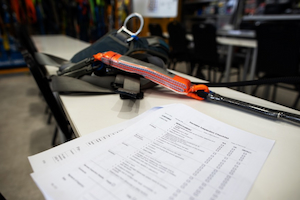
A fall protection inspection should include:
- Harness webbing, stitching, D-rings, buckles, grommets, and labels
- Lanyards, lifelines, shock absorbers, snap hooks, and carabiners
- Self-retracting lifelines, housings, cables, webbing, and locking function
- Anchor points and connectors
- Guardrails, covers, warning lines, and other installed systems
Workers should not use fall protection equipment if they are unsure whether it is safe. Guessing is not acceptable when the equipment is intended to protect someone’s life.
Rescue Planning After a Fall
A fall protection plan is incomplete without a rescue plan. If a worker falls and is suspended in a harness, they may need prompt rescue. The plan should not rely only on calling emergency services unless that response is realistic for the location, height, equipment, and time involved.
A rescue plan should identify how the worker will be reached, what equipment will be used, who is trained to perform the rescue, and how emergency medical care will be contacted if needed. Workers should know what to do if they witness a fall, how to report it, and why they should never attempt an unplanned rescue that puts additional people at risk.
Fall Protection Training
Training is essential because fall protection equipment and systems only work when workers know how to use them. Workers need to understand where fall hazards exist, what protection is required, how to inspect equipment, how to connect properly, and what to do if equipment is damaged or conditions change.
Fall protection training should cover:
- How to recognize fall hazards
- When fall protection is required
- What type of protection is needed for the task
- How to inspect and use equipment
- How to identify unsafe anchor points
- How to avoid swing fall and clearance hazards
- How to report damaged equipment or unsafe conditions
- What rescue procedures apply after a fall
Training should be practical and task-specific. Workers should not be expected to use fall protection based only on general awareness. They need instruction that matches the equipment, work area, and hazards they will actually face.
Common Fall Protection Mistakes
Many fall protection failures happen because a system is present but not used correctly. Having a harness on site does not protect anyone if it is not worn, adjusted, connected, and attached to the right anchor point.
Common mistakes include:
- Working near an edge without protection
- Wearing a harness but not tying off
- Tying off to an unapproved anchor point
- Using damaged or expired equipment
- Using a lanyard without enough fall clearance
- Ignoring swing fall hazards
- Removing guardrails and not replacing them
- Leaving floor holes uncovered or poorly covered
- Using ladders that are damaged or too short
- Standing on the top step of a stepladder
- Assuming a short task does not require protection
- Failing to plan for rescue after a fall
These mistakes are preventable when fall hazards are taken seriously and workers are given the time, equipment, and training needed to do the job safely.
How to Improve Fall Protection Safety
Improving fall protection starts with planning. Before elevated work begins, the work area should be evaluated, fall hazards should be identified, and the safest practical method should be selected.
In many cases, the best option is to eliminate the need to work at height. If that is not possible, the next priority is to prevent the fall with guardrails, covers, restraint systems, or safer work methods. When a fall cannot be fully prevented, fall arrest equipment may be needed to reduce the severity of injury.
Employers and supervisors can improve fall protection by:
- Planning elevated work before it begins
- Providing the correct equipment for the task
- Making sure workers are trained and competent
- Inspecting fall protection systems regularly
- Correcting damaged guardrails, covers, ladders, and anchor points
- Enforcing tie-off requirements
- Preparing a realistic rescue plan
- Stopping work when conditions become unsafe
Workers can support fall protection safety by inspecting equipment, staying tied off when required, reporting hazards, using ladders correctly, and refusing to bypass fall protection for speed or convenience.
Fall Protection Starts Before the Work Begins
Fall protection is most effective when it is built into the job, not added after workers are already exposed to the hazard. Before working at height, take time to identify the fall hazards, choose the correct protection, inspect the equipment, and make sure everyone understands the plan.
Falls can happen in seconds, but prevention starts long before a worker reaches the edge. A safe work area, the right equipment, proper training, and consistent use of fall protection can prevent serious injuries and save lives.
.jpeg)

