Housekeeping on a construction site is more than just keeping things looking clean. It plays a critical role in maintaining a safe, efficient, and productive work environment. Poor housekeeping creates hazards that can lead to injuries, equipment damage, and costly delays.
Construction sites are constantly changing. Materials are delivered, work areas shift, and multiple crews often work in the same space. Without consistent housekeeping practices, these changes quickly lead to clutter, blocked access, and unsafe conditions.

Why Housekeeping Is Critical on Construction Sites
Good housekeeping directly impacts safety, productivity, and overall jobsite control. When work areas are clean and organized, workers can move safely, complete tasks efficiently, and focus on the job instead of avoiding hazards.
Poor housekeeping, on the other hand, increases the risk of:
- Slips from mud, spills, or wet surfaces
- Trips over debris, cords, and uneven ground
- Injuries from sharp objects like nails or scrap metal
- Fires caused by accumulated combustible materials
- Blocked access to exits, ladders, and emergency equipment
These hazards are preventable, but only if housekeeping is treated as an ongoing responsibility rather than an occasional task.
Construction Housekeeping Hazards
Construction sites generate large amounts of waste throughout the day. Scrap materials, packaging, and general debris can quickly build up if not controlled. Even small amounts of clutter can create serious hazards when left unaddressed.
Scattered trash, small items, tools, and materials can easily cause trips and falls. Cords, hoses, and cables stretched across walk paths add another layer of risk, especially in busy or congested areas.
Mud, dust, and water are common on construction sites. Without proper cleanup, these conditions create slippery surfaces that increase the likelihood of falls.
Many housekeeping issues develop gradually. A single board or misplaced tool may not seem dangerous, but as hazards accumulate, they create a much higher risk environment.
OSHA Requirements for Construction Housekeeping
OSHA places strong emphasis on housekeeping in construction environments. Key expectations include:
- Keeping work areas, passageways, and stairs clear of debris
- Removing scrap materials as work progresses
- Properly storing materials to prevent movement or collapse
- Providing containers for waste and hazardous materials
- Disposing of waste at regular intervals
These requirements are designed to reduce hazards and maintain control of the jobsite. Employers are responsible for ensuring these practices are followed, but workers play a key role in maintaining them.
Keeping Things Organized
Materials should always be stored in designated areas that are stable, secure, and out of walkways. Improperly stored materials can shift, fall, or collapse, creating serious hazards.
An organized work area allows workers to focus on their tasks without navigating obstacles. Tools and equipment should be returned to their proper place when not in use.
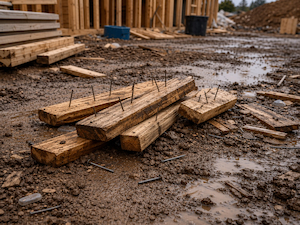
OSHA Construction Standard 1926.25(a) During the course of construction, alteration, or repairs, form and scrap lumber with protruding nails, and all other debris, shall be kept cleared from work areas, passageways, and stairs, in and around buildings or other structures.
Access to stairways, ladders, scaffold points, exits, and emergency equipment must always remain clear. Blocking these areas can delay emergency response and increase the severity of incidents.
Safe Storage Practices
Effective storage practices help prevent injuries and improve efficiency across the jobsite.
OSHA Construction Standard 1926.250(a)(1) All materials stored in tiers shall be stacked, racked, blocked, interlocked, or otherwise secured to prevent sliding, falling or collapse.
Key practices include:
- Stacking materials evenly on stable surfaces
- Securing materials to prevent tipping or collapse
- Keeping heavier items at lower levels
- Storing materials away from edges and openings
- Maintaining clear paths for workers and equipment
- Taking the time to store materials properly reduces both immediate hazards and long-term risks.
Waste Management on Construction Sites
Managing waste is a key part of maintaining good housekeeping. Allowing debris to accumulate increases the risk of trips, fires, and other hazards.
OSHA Construction Standard 1926.252(c) All scrap lumber, waste material, and rubbish shall be removed from the immediate work area as the work progresses.

Effective waste management practices on a construction site include:
- Disposing of scrap materials in designated bins or dumpsters
- Removing or bending protruding nails from scrap wood
- Cleaning up spills immediately
- Keeping trash containers accessible and not overfilling them
- Separating materials when required for disposal or recycling
Waste containers should be provided and used consistently to keep the site under control.
Daily Cleanup and Ongoing Maintenance
Housekeeping should be built into the workday, not left for the end of a project. Waiting until later allows hazards to build up and increases the risk of incidents.
OSHA Construction Standard 1926.25(c) Containers shall be provided for the collection and separation of waste, trash, oily and used rags, and other refuse. Containers used for garbage and other oily, flammable, or hazardous wastes, such as caustics, acids, harmful dusts, etc. shall be equipped with covers. Garbage and other waste shall be disposed of at frequent and regular intervals.
Best practices include:
- Cleaning up as work is performed
- Removing waste throughout the shift
- Performing a final cleanup before leaving the work area
Consistent cleanup keeps the jobsite manageable and significantly reduces risk.
Roles and Responsibilities
Clear roles and responsibilities are essential for maintaining consistent housekeeping on a construction site. When both workers and supervisors understand what is expected of them, hazards can be identified and corrected before they lead to incidents.

Construction Worker Responsibilities
Every worker plays a role in maintaining housekeeping standards. Responsibilities for construction workers include:
- Keeping their immediate work area clean and organized
- Picking up debris and materials they create or notice
- Storing tools and equipment properly
- Reporting hazards that need attention
Construction Supervisor Responsibilities
Supervisors are responsible for setting expectations and ensuring compliance with responsibilities like:
- Establishing clear housekeeping expectations
- Providing proper storage areas and waste containers
- Monitoring the jobsite for hazards
- Addressing issues before they lead to incidents
Housekeeping is most effective when everyone understands their role and takes ownership.

The Impact of Good Housekeeping
A well-maintained construction site reduces hazards, improves efficiency, and helps prevent injuries. Workers can move more safely, tasks are completed more efficiently, and overall jobsite conditions improve.
When housekeeping is taken seriously, it creates a safer environment for everyone on site.
Construction site housekeeping is not a one-time effort. It requires consistency, attention, and participation from everyone on the jobsite. By maintaining clean work areas, properly storing materials, and managing waste effectively, companies can significantly reduce risk and improve overall safety performance.
.jpg)

.jpeg)