19 Free Hazardous Materials Safety Articles
Hazardous materials safety is the practice of recognizing, handling, storing, and communicating the dangers of chemicals and other harmful substances so that workers are not injured or made sick by them. Hazardous materials safety matters because these substances can cause harm in more ways than almost any other job site hazard, from immediate fires, explosions, and chemical burns to long-term illnesses such as cancer and lung disease that may not appear for years. Workers also have a legal right to know what they are exposed to and how to protect themselves.
The hazardous materials safety articles on this page explain common chemical and material hazards and how to control them, based on current OSHA requirements. Learn more about hazard communication and safety data sheets, flammable and combustible liquids like gasoline, compressed gas cylinders, and specific substances such as silica, lead, benzene, asbestos, and arsenic. There are also articles that address carbon monoxide, bloodborne pathogens, HAZWOPER for hazardous waste work, and process safety management for highly hazardous chemicals.
Safety managers and supervisors can use these articles to review a hazard before working with a chemical, train a new worker on safe handling, or prepare a safety meeting on a specific substance. They are written for safety managers, supervisors, and any worker who handles, transports, or works near hazardous materials on the job.
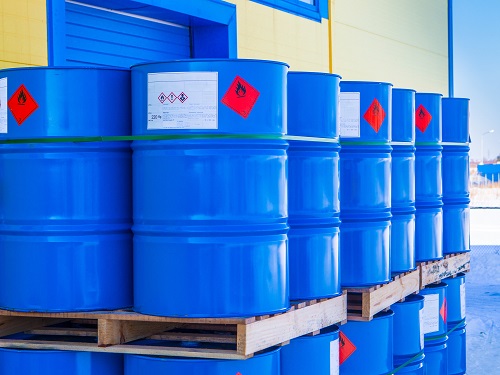
Why it matters
Hazard communication is one of OSHA’s most frequently cited standards.
Hazardous Materials Safety Articles




Hazardous Materials FAQs
What is the Hazard Communication Standard (HazCom)?
The Hazard Communication Standard (HazCom) is OSHA's 'right to know' rule that requires employers to inform workers about the hazardous chemicals they handle (OSHA 1910.1200). It mandates a written program, labeled containers, a safety data sheet for every hazardous chemical, and worker training on the hazards and how to stay protected. HazCom is consistently among OSHA's most frequently cited standards.
What is a safety data sheet, and what must employers do with it?
A safety data sheet (SDS) is a standardized, 16-section document from the chemical manufacturer that details a product's hazards, safe handling and storage, exposure limits, and first aid and emergency measures. Employers must keep an SDS for every hazardous chemical on site and make it readily accessible to workers on all shifts.
What is HAZWOPER, and which workers need it?
HAZWOPER stands for Hazardous Waste Operations and Emergency Response, and it covers workers who handle hazardous waste or respond to chemical emergencies (OSHA 1910.120). It applies to those involved in hazardous waste cleanup, treatment, storage, and disposal, and to emergency responders dealing with chemical releases. Hazardous waste site workers generally need 24 to 40 hours of initial training plus an annual refresher, depending on their role.
What is a permissible exposure limit (PEL)?
A permissible exposure limit (PEL) is the maximum amount of a hazardous substance a worker may legally be exposed to, set by OSHA and usually measured as an 8-hour time-weighted average. Many substances, such as silica, lead, and benzene, also have their own detailed OSHA standards that add air monitoring, exposure controls, and medical surveillance.
How should compressed gas cylinders be stored and handled?
Store compressed gas cylinders upright and secured with a chain or strap so they cannot tip over, and keep valve protection caps in place when the cylinders are not in use. Separate oxygen and other oxidizers from fuel gases like acetylene by at least 20 feet or a noncombustible barrier, and keep all cylinders away from heat and ignition sources.
What is the difference between a flammable and a combustible liquid?
The difference is the flash point: a flammable liquid has a low flash point and can ignite at normal working temperatures, while a combustible liquid has a higher flash point and must be heated before its vapors will ignite. The flash point is the lowest temperature at which a liquid gives off enough vapor to ignite. Both can burn, but flammable liquids pose the greater everyday ignition risk.